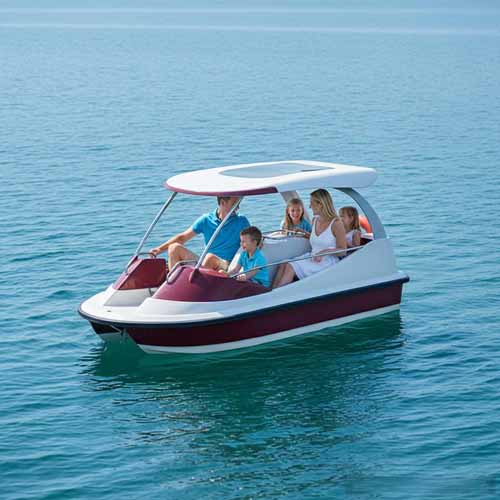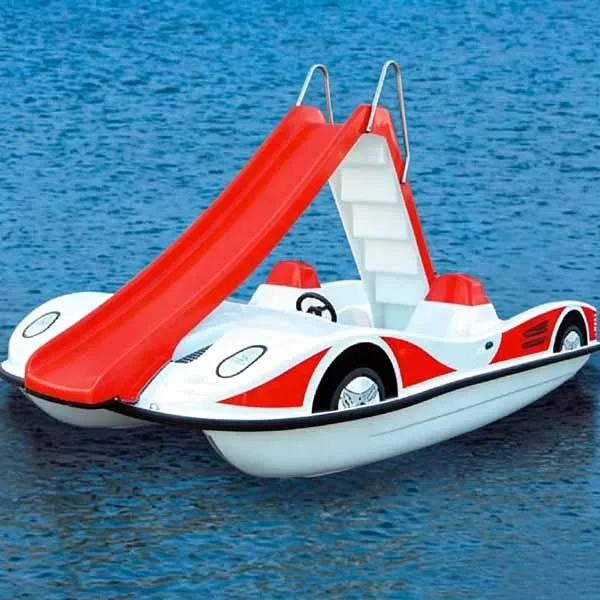

Bumper boats are primarily classified based on three dimensions: power source, passenger capacity/configuration, and interactive features:
Classification by Power Source
Electric Bumper Boats:Powered by DC motors and rechargeable batteries; they are eco-friendly, quiet, and capable of continuous operation for several hours, making them the mainstream choice today.
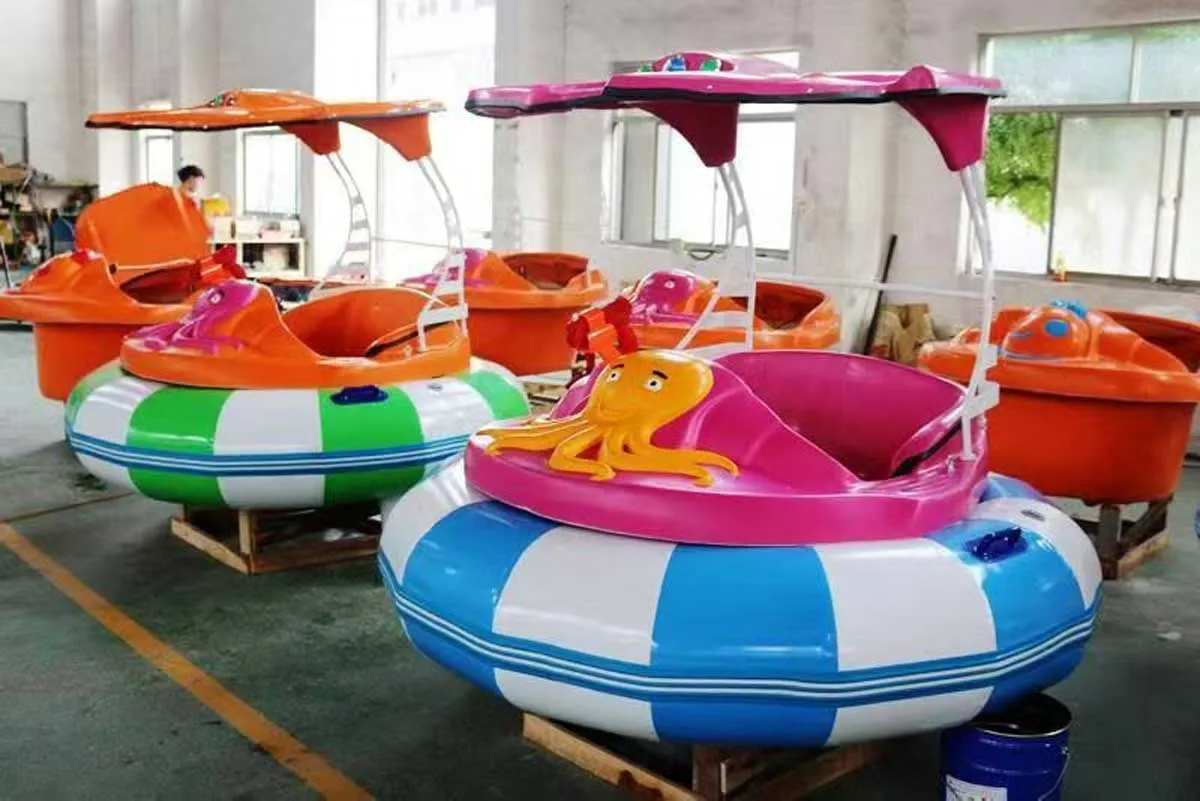
Features of electric bumper boats
1.Simple operation, suitable for all ages
Features steering wheel control and forward/reverse gears; requires no manual pedaling or hand-cranking, making it easy for even young children to drive. The speed is gentle—moving slowly within the pool—and impacts are soft, offering peace of mind for parent-child rides.
2.Rich interactive gameplay, high repeat-visit rate
The standard model comes with colorful lights and a loop of children's songs; optional add-ons include high-pressure water gun battles or infrared laser battles. It supports year-round operation: water battles in the summer and laser games in the winter (with water guns disabled).
3.Fun, engaging collisions
The hull is fitted with a thick, inflatable bumper; collisions result in a gentle bounce rather than violent shaking. Bumping is a core part of the fun, yet the design ensures safety and prevents injury to riders.
4.Quiet and comfortable
The sealed, brushless underwater motor operates with minimal noise—no harsh roaring sounds—making it suitable for indoor malls or public plazas without disturbing the peace at night.
Motorized Bumper Boats: Powered by gasoline engines (two-stroke or four-stroke); they offer high power but generate relatively higher noise and emissions.
Features of motorized bumper boats
1.Powerful Performance and High Speed
The external gasoline outboard motor delivers high thrust, allowing for speeds far exceeding those of electric boats; this provides greater impact force during cruising and collisions—an exciting experience that appeals to younger riders. It maintains strong performance on large bodies of water and remains controllable even in windy or current-prone conditions.
2.No Range Limits; All-Day Continuous Operation
Powered by gasoline rather than batteries, the boat can operate continuously simply by refueling when the tank runs low. It avoids the 4–8 hour runtime limitations of electric models, making it ideal for scenic areas hosting visitors throughout the day.
3.Responsive Power Delivery
Speed is controlled via the throttle, allowing for instant acceleration; handling is highly responsive during turns, overtaking, and collisions. It supports dual modes of play: long-distance lake cruising and bumper-style interaction.
4.Independent Water-Cooled/Air-Cooled Engine
The engine unit is fully waterproof and equipped with a propeller guard. Its independent design allows the outboard motor to be removed or installed separately for maintenance without compromising the boat's hull.
Manually Powered Bumper Boats:Operated via hand cranks or foot pedals; they lack mechanical engines and are suitable for young children or specific leisure settings.
Propulsion System Features
Purely mechanical design with no electrical components; propulsion is achieved by manually turning hand-cranks on both sides of the hull to drive underwater paddles.
Independent control of the left and right hand-cranks allows for steering (cranking one side), straight-line movement (cranking both simultaneously), and on-the-spot turns (cranking in opposite directions).
Requires no charging or fuel; operations can begin immediately in any body of water, making it suitable for deployment in outdoor locations or areas without a power supply.
Classification by Function and Interaction
Basic Bumping Models: Feature only driving and bumping capabilities, relying on anti-collision tires around the hull to absorb impact.
Laser/Water Battle Models:Integrated with laser guns, audio, and lighting systems; the boat sprays water or triggers audio-visual feedback when hit, supporting multiplayer interactive battles.
Smart Control Models: Equipped with electronic coin-operated timers, remote start/stop functions, and independent drive control units, facilitating operational management and safety monitoring.
Classification by Passenger Capacity and Design
By Passenger Count: Categorized into single-rider, two-rider (most common), parent-child (3-person), and multi-rider (4 or more people) models.
By Material/Structure: Categorized into rotational-molded polyethylene models (one-piece molding, impact-resistant, usable in water as shallow as 40cm) and fiberglass models (lightweight and corrosion-resistant, often featuring an inflatable outer ring).
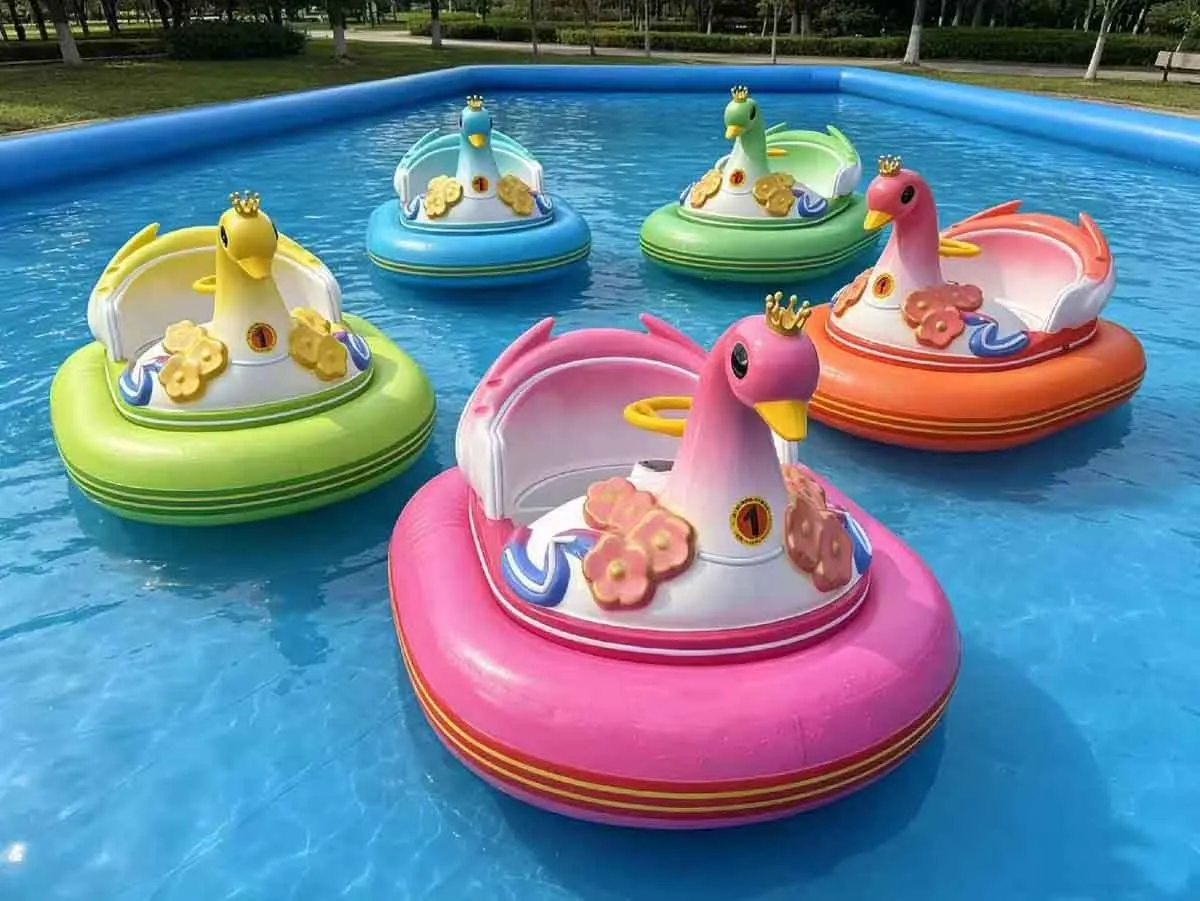
By Appearance/Styling: Common designs include animal shapes (ducks, swans, dolphins, turtles) and thematic shapes (pirate ships, warships, etc.).