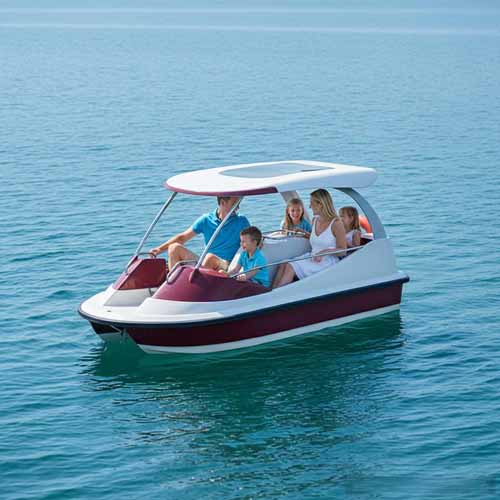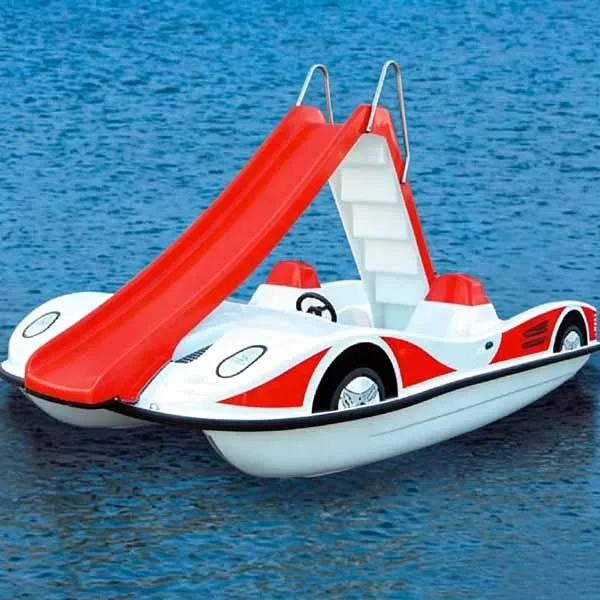

I. The power source of a pedal boat: Human-Powered Pedaling
The boat is equipped with pedals similar to those on a bicycle. The rider sits and pedals back and forth; leg power drives the central axle to rotate continuously, converting human effort into rotational energy.
II. Power Transmission: Internal Drive Components
The pedal axle connects to a chain or gear assembly inside the hull. The sole function of this system is power transmission—transferring the rotational force from the pedals vertically down to the underwater propulsion unit.
Most multi-person pedal boats use a synchronization linkage to ensure the left and right pedal sets rotate in unison, preventing one side from moving freely while the other gets stuck.
III. Core Propulsion: Underwater Propulsion Mechanisms (Two Types)
1.Propeller Type (Most common in scenic areas today)
A drive shaft extends underwater, with a propeller at the end enclosed in a protective cage to prevent entanglement with aquatic weeds. As the shaft turns, the propeller spins rapidly, with blades continuously pushing water backward; this backward displacement generates a reactive thrust that propels the boat forward.
2.Side Paddle-Wheel Type (Older style pedal boats)
Large, bladed wheels are mounted on both the left and right sides of the hull. The drive mechanism rotates the wheels, and the blades continuously slap and sweep the water backward, using the water's reaction force to move the boat forward. The downside is that in shallow water, the wheels can easily snag on weeds or rocks on the bottom.
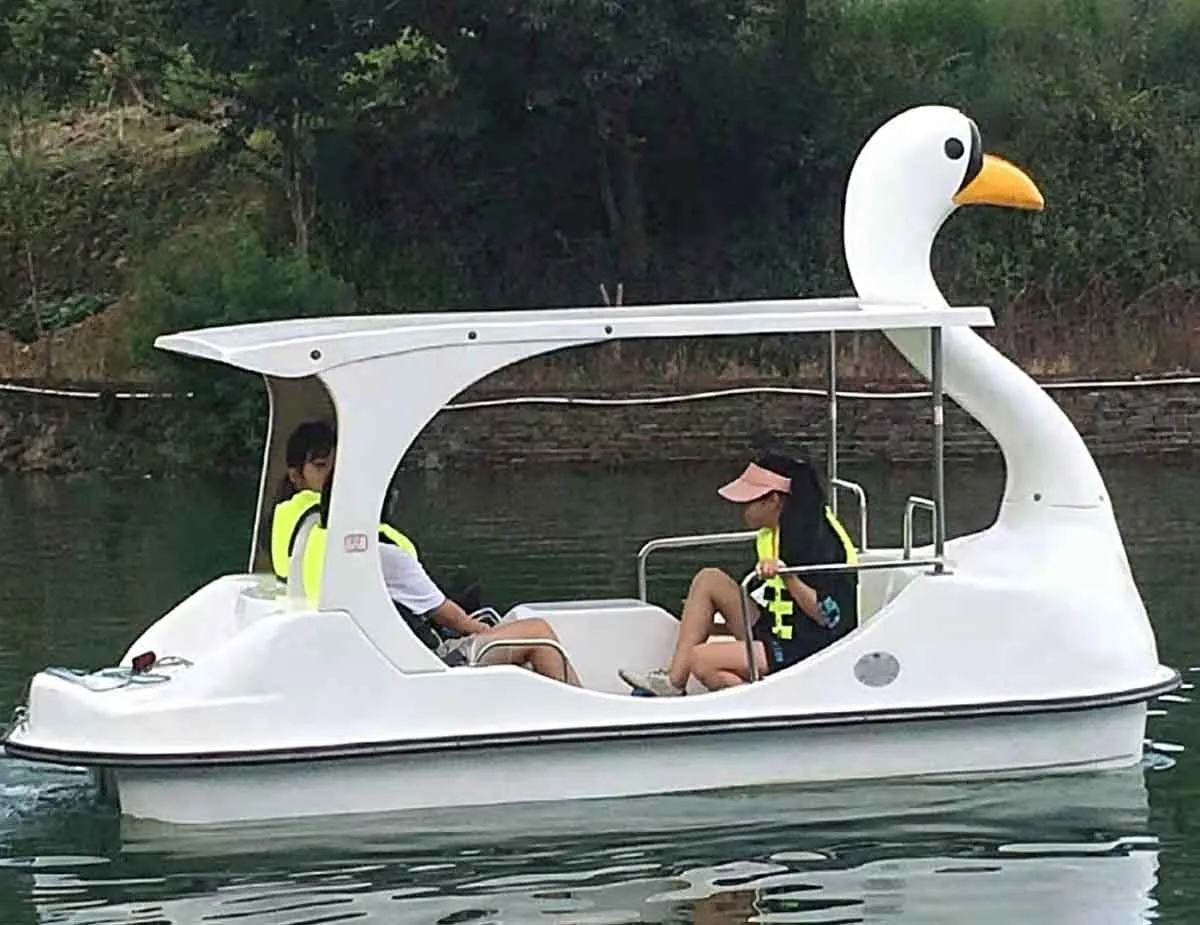
IV. The turning principle of pedal boats: Underwater Rudder Blade
A simple handlebar-style steering mechanism is located at the front of the boat. A metal linkage connects the handlebars to a vertical plate (rudder blade) submerged in the water.
Turning the handlebars left: The underwater rudder blade tilts left; water pressure against the blade pushes the stern to the right, causing the bow to naturally turn left.
Turning the handlebars right: The rudder blade tilts right, causing the bow to turn right.
A few simple, small boats lack an independent rudder and steer by varying the pedaling speed between the left and right sides; pedaling hard and fast on one side while slowing down on the other causes the boat to veer toward the slower-pedaling side.
V. Buoyancy Principle: Unsinkable Design
The hull consists of a sealed, hollow, buoyant shell—typically made of thickened plastic or fiberglass—featuring internal sealed buoyancy chambers that provide inherent buoyancy. Even if a small amount of water enters the cabin, these chambers keep the vessel afloat, preventing it from sinking. The surrounding railings serve solely as safety barriers to prevent passengers from falling overboard, while the canopy provides shade and plays no role in propulsion.
Summary of Pedal Boat Operation
Pedaling generates rotational power → Internal chains or gears transmit power to the vessel's underside → Underwater propellers or paddle wheels push water backward → Water reaction force propels the vessel forward;
Operating the control handle adjusts the angle of the underwater rudder, altering water flow direction to steer the vessel.